
Windows bring natural light into your home, open the view and help create a comfortable living space. But because glass is one of the most exposed parts of a home, homeowners may also wonder how much protection their windows provide.
That is where security glass for windows comes in.
Security glazing is designed to do more than ordinary glass when it is struck or broken. Depending on the type of glass, it can help reduce the risk of injury, keep broken glass in place, delay forced entry, or provide a much higher level of impact resistance.
Here is what homeowners should understand before choosing a glass option.
What Is Security Glass?
Security glass is designed to remain a more effective barrier after impact than conventional glass.
One common construction is laminated security glass, where layers of glass are bonded together with an interlayer. If the glass cracks, the interlayer helps hold the broken pieces together instead of allowing the entire pane to fall away.
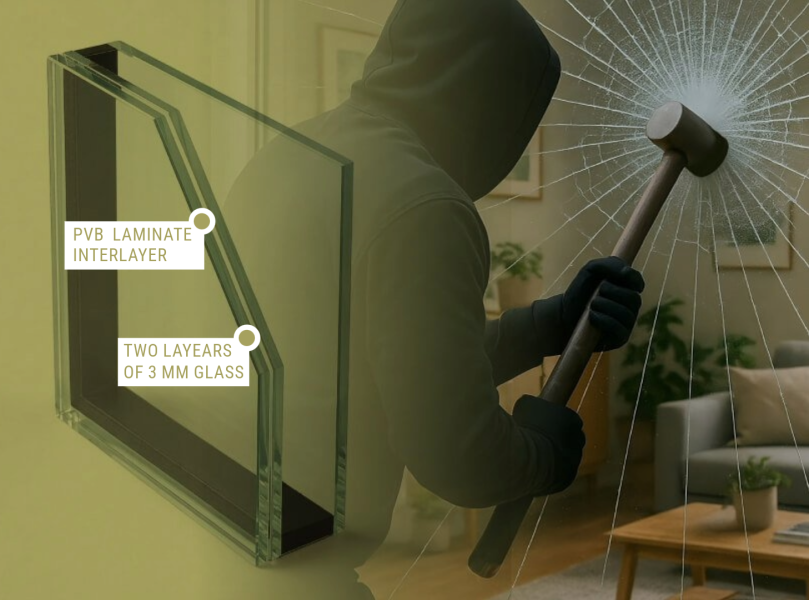
Stage SecurePlus Security Glass, for example, uses two layers of 3 mm glass with a PVB laminate interlayer.
This construction helps retain fragments after breakage; delay forced entry and improve sound control.
This distinction matters because a broken window does not automatically mean an open window.
With conventional or tempered glass, an opening can become accessible once the glass has broken. Laminated security glass is intended to remain together longer, creating an additional obstacle between the exterior and interior of the home.
Is Security Glass Really Shatterproof?
You may see phrases such as shatterproof windows, non-breakable glass or unbreakable glass windows online.
They are useful descriptions of what homeowners are looking for, but they can also be misleading.
Most security glazing can still crack when subjected to sufficient force.
The important difference is what happens after impact.
Laminated security glass is designed so the cracked glass remains bonded to its interlayer rather than immediately creating an open hole. Repeated impacts may still eventually penetrate the glazing, but breaking through can require considerably more time and effort than breaking ordinary glass.
So instead of asking:
“Can this glass break?”
A more useful question is:
“What happens after it breaks?”
That is one of the biggest differences between ordinary glazing and security glazing.
Three Levels of Glass Protection
At Stage Windows & Doors, homeowners can choose between different levels of glass protection depending on the application.
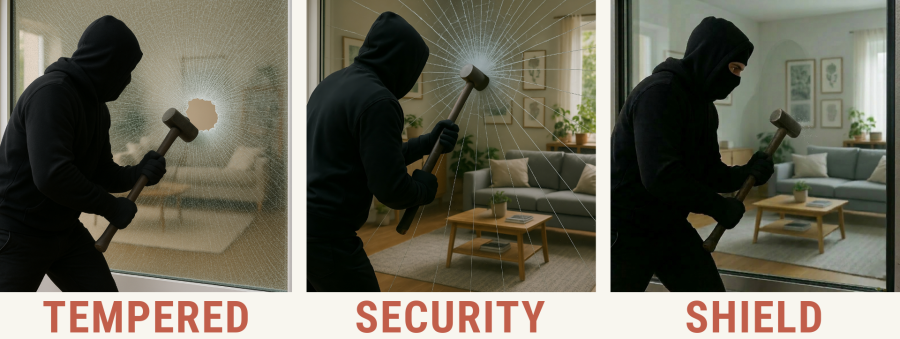
Tempered Glass: Everyday Safety
Tempered glass can be a practical choice when the main concern is safer breakage rather than resistance to forced entry.
Stage identifies typical applications including areas where safety glazing is required or desired, such as bathrooms, doors and lower-risk locations.
Security Glass: Added Protection for the Home
For many homeowners looking for increased residential security, laminated security glass offers a middle ground between conventional glazing and specialized high-security systems.
Stage recommends applications such as:
- Ground-floor windows
- Sidelites
- Large glass areas near doors
- Security-conscious homes
- Rooms where improved sound control is important
These are also areas where glass may be comparatively accessible from outside.
Shield Glass: Higher-Level Protection
Some properties require a substantially higher level of protection.
Stage SecurePlus Shield Glass is designed for high forced-entry resistance and severe-impact applications. Stage identifies applications such as specialized security projects, high-threat properties, and residences requiring enhanced protection.
Because stronger security glazing can also be substantially heavier and thicker, the window or door system surrounding the glass must be able to accommodate it.
Compare the difference between Stage Security and Shield Glass here.
Learn more about security glass options from Stage Windows & Doors here.
Does Security Glass Help Prevent Break-Ins?
Security glass cannot guarantee that a home will never be entered.
Its purpose is to make penetrating the glazed opening more difficult and time-consuming.
With ordinary tempered glass, an impact may cause the entire pane to break away. With laminated security glass, the glass may crack, but the PVB interlayer helps keep the fragments together.
Security Glass from Stage with one of the strongest options from a burglary-resistance perspective because it remains in the frame longer and helps delay entry.
Where Does Security Glass Make the Most Sense?
You do not necessarily need the same level of glazing throughout every part of your home.
Security glass can be particularly worth considering for more accessible openings, including:
Ground floor windows.
These tend to be easier to reach than upper windows.
Windows beside the entry doors.
Sidelites and nearby glazed areas may deserve additional consideration because of their location around an entrance.
Patio doors and large glazed openings.
Large areas of glass can benefit from glazing designed to stay together after impact.
Basement windows.
Depending on their height and accessibility, basement windows may also be worth evaluating.
Homes where additional security is a priority.
Homeowners may simply prefer another protective layer around particularly vulnerable areas.
The goal does not have to be turning the entire home into a fortress. A more practical strategy is identifying the openings where additional protection provides the most value.
Security Glass Has Benefits Beyond Security
Security is the obvious reason to consider laminated glass, but it is not its only potential advantage.
Better Sound Control
The laminated construction can help reduce traffic and outdoor noise. Stage describes its security glass as providing superior sound dampening compared with basic tempered glazing.
That can make security glass worth considering for homes near busy roads or other noisy environments.
UV Protection
Stage’s Security Glass is also specified as blocking up to 99% of harmful UV rays, helping reduce UV exposure through the glazing.
Energy-Efficient Glass Packages
Choosing security glass does not necessarily mean giving up energy efficiency.
Both tempered and Stage Security Glass can be incorporated into a Low-E sealed insulated glass unit, allowing security considerations to be combined with the thermal performance features homeowners expect from modern windows.
This is important because glass should be considered an entire system rather than based on security alone.
Are Security Windows Bulletproof?
Not necessarily.
This is an important distinction, particularly because homeowners searching for security glazing often encounter phrases such as bulletproof windows for homes.
Laminated security glass designed to delay forced entry should not automatically be assumed to provide ballistic protection.
Stage tempered glass have no ballistic resistance and its Security Glass as usually providing none unless the system has been specifically engineered and tested for that purpose. Stage Shield Glass may provide ballistic protection when the particular glazing system is rated and tested to a recognized standard such as UL 752.
If ballistic resistance is required, homeowners should therefore look for the specific testing and rating of the complete glass system rather than relying on words such as security, shatterproof or unbreakable.
Choosing the Right Security Glass for Your Home
Before choosing a glass package, consider what you actually want it to accomplish.
Ask yourself:
- Is my main priority safer glass breakage?
- Do I want the glazing to stay together after impact?
- Am I concerned about accessible ground-floor windows?
- Do I want additional protection around doors or sidelites?
- Is outdoor noise also a concern?
- Do I need specialized forced-entry or ballistic protection?
- Can my window or door system accommodate heavier security glazing?
For everyday safety, tempered glass may be sufficient.
For homeowners looking for greater forced-entry resistance without moving into specialized security glazing, laminated Security Glass may make more sense.
And where the property requires a significantly higher level of protection, an engineered high-security glazing solution such as Shield Glass may be appropriate.
Security Starts With the Entire Window System
Glass is an important part of window security, but it is only one component.
The frame, locks, hardware, glass construction and installation all contribute to how the opening performs.
Stage Windows & Doors manufactures its glass units in-house across its window, patio-door and entry-door product lines, allowing the glazing to be considered as part of the complete product rather than as an isolated upgrade.
Whether your priority is everyday safety or an additional layer of protection against forced entry, understanding the differences between tempered, security and high-security glass makes it easier to choose a solution that matches your home.
Explore more about Security options across windows, patio and entry door systems on our website.